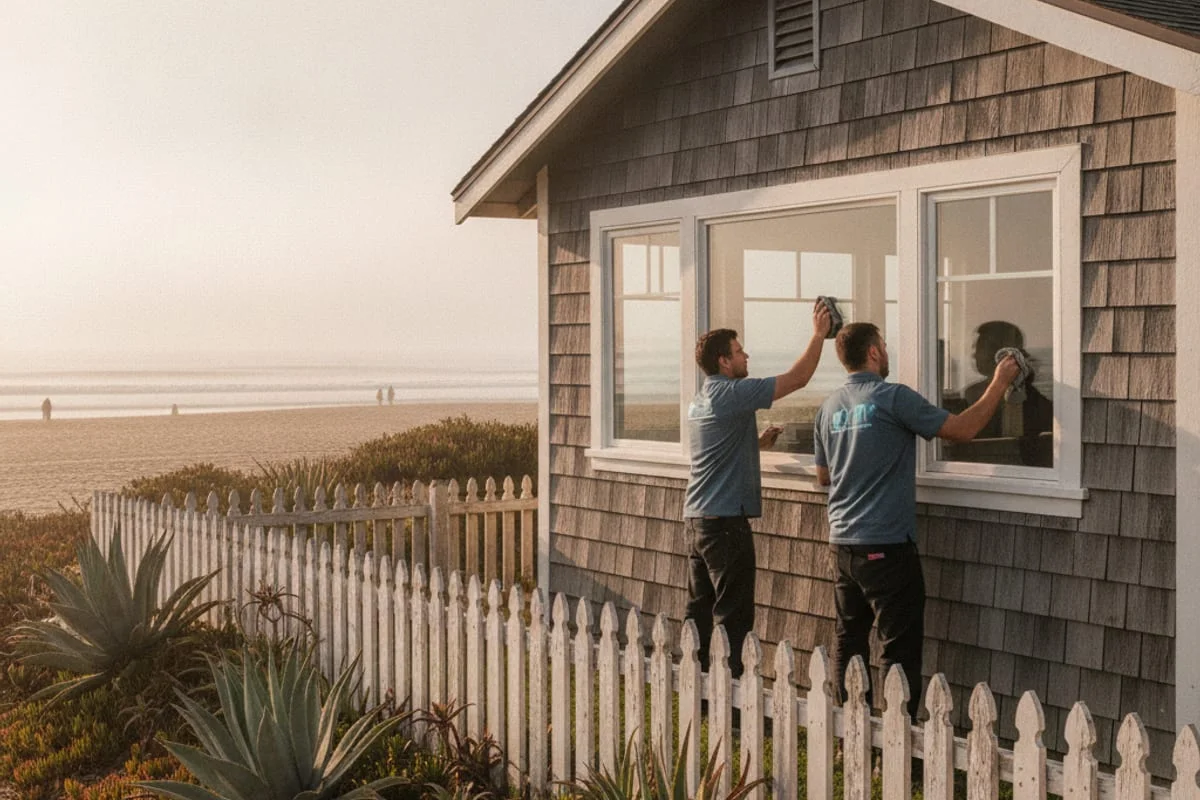
Why the coast is harder on windows than anywhere else in the county
A window that performs fine in Santee or Poway may corrode, pit, and fail in ten years in Coronado, Encinitas, or La Jolla. The coastal zone is chemically aggressive. Salt particles carried in marine air deposit on every exposed surface, and the marine layer adds persistent humidity that accelerates the corrosion of exposed metals and degrades some coatings.
The good news is that several modern window materials handle the coastal environment very well, and avoiding the wrong choices is not complicated once you know what to look for.
What salt air actually does to windows
Salt air attacks windows through two mechanisms. The first is galvanic corrosion on exposed metal components: hardware, fasteners, screen frames, and aluminum window frames themselves. Aluminum corrodes in salt air to form a dull, chalky oxidation layer (aluminum oxide) that is not structurally catastrophic but looks bad and can eventually pit the frame surface. Steel hardware (hinges, locking mechanisms, screen tracks) is much more vulnerable than aluminum and can rust aggressively within a few years of salt air exposure if not properly coated or replaced.
The second mechanism is seal degradation. The marine layer adds humidity that works on window seals, particularly on older windows where the silicone or butyl sealant has started to harden and crack. Moisture gets into the marginal zone of the insulated glass unit, then freezes (in cold snaps) or expands (in heat), and the seal fails.
Both mechanisms accelerate with proximity to the coast. Homes directly on the bluff in La Jolla, Encinitas, Carlsbad, Oceanside, Del Mar, Pacific Beach, and the Coronado Strand are in a different exposure category than homes a mile inland. Homes in Ocean Beach and Point Loma are closer to the middle exposure range.
Frame materials that handle salt air well
Vinyl (PVC): Vinyl does not corrode. The base material is chemically inert to salt air and marine humidity, and it will not oxidize the way aluminum does. For coastal homes, vinyl is the practical baseline choice. The caveat: the hardware (locks, cranks, hinges, balance mechanisms) inside a vinyl window is usually metal, and those components need to be stainless steel or corrosion-resistant zinc alloy to last in a coastal environment. Ask specifically about the hardware material on any vinyl window being quoted for a coastal home.
Fiberglass: Fiberglass is excellent in coastal conditions. The base material does not corrode, absorb moisture, or expand and contract significantly with temperature and humidity changes. A fiberglass window with stainless steel hardware is the premium coastal specification and carries a predictably long service life. The trade-off is cost: fiberglass runs 30-60% more than vinyl and may be harder to source in the exact size and color you want on a retrofit job.
Aluminum with marine-grade anodizing or powder coat: Standard anodized aluminum can handle moderate coastal exposure, but bare aluminum or inadequately coated aluminum will oxidize visibly within a few years on a direct-ocean-facing home. If you are replacing aluminum windows with new aluminum (common in contemporary homes or condos where the frame profile needs to match), specify Type III hard anodizing or a high-quality powder coat in a coastal-rated specification. Hardware should be stainless.
Wood and wood-clad: Exterior wood requires ongoing maintenance in any climate, but coastal conditions are particularly unforgiving. Bare wood on the exterior of a La Jolla or Coronado home needs painting every 3-5 years to avoid moisture intrusion and rot. Wood-clad windows (aluminum or fiberglass cladding on the exterior, wood interior) handle this better because the exterior is protected. In a coastal home where interior wood character is valued, wood-clad fiberglass is a reasonable choice. Pure wood exterior on a direct-ocean-facing home is a high-maintenance commitment.
Glass coatings in the coastal zone
The SHGC and U-factor requirements for coastal San Diego (primarily CEC Climate Zone 7) are achievable with standard double-pane low-E glass, and there is no special coastal glass specification required by Title 24. The marine layer and overcast sky condition that defines many coastal days does reduce direct solar heat gain compared to inland zones, so the heat gain control that SHGC provides is less critical on a north or west-facing window in Carlsbad than it is on a west-facing window in El Cajon.
What does matter at the coast is the spacer bar between the panes. The spacer separates the two panes of glass in a double-pane unit and is part of the seal system. Metal spacers (typically aluminum) have higher conductivity and are more vulnerable to moisture-related seal failure at the spacer edge than warm-edge spacers (stainless steel, tin-plate steel, or foam composites). For a coastal application, specifying a warm-edge spacer is worth asking about.
For more on how glass coatings and U-factor ratings work in the San Diego context, see the energy-efficient windows and Title 24 guide.
Hardware: the failure point most quotes ignore
The hardware inside a window is often quoted as a detail but is actually the first thing to fail in a coastal environment. A vinyl double-hung with a zinc diecast balance mechanism will outlast the same window with a pot-metal balance in a salt-air environment by a significant margin. Ask your installer:
- What material are the sash locks made of? (Stainless steel is the right answer for coastal.)
- What are the balance mechanisms made of on double-hungs? (Metal or nylon; ask which.)
- What are the crank mechanisms on casements made of? (Stainless or anodized aluminum is appropriate.)
- Are the screen frames anodized aluminum or painted steel?
On a casement window directly facing the ocean in La Jolla, a steel screen frame will show rust within 18 months. An anodized aluminum screen frame will last 10+ years. It is a small detail on a per-window basis that accumulates into a real maintenance difference over the life of the installation.
Neighborhoods with the highest coastal exposure in San Diego County
These communities are in the highest salt-air exposure categories and warrant the most attention to material specification:
Coronado Strand: Ocean on both sides. One of the highest salt-air exposure environments in the county. Vinyl with stainless hardware or fiberglass is the appropriate specification.
La Jolla Shores and La Jolla Cove: Direct ocean exposure with frequent marine layer. Similar specification.
Del Mar and Torrey Pines area: Bluff-top homes are in a high-exposure zone. Homes a few blocks inland are in a moderate zone.
Encinitas, Carlsbad, and Oceanside coastal strip: The Pacific Coast Highway corridor has moderate-to-high salt exposure. Homes on the lagoon side of Coast Highway in Carlsbad have some tidal salt influence as well.
Ocean Beach and Point Loma: Moderate salt exposure, marine layer influence. Standard vinyl performs well here.
Pacific Beach and Mission Beach: Similar to OB, moderate exposure. Marine layer is persistent.
Imperial Beach: High salt exposure close to the border. Vinyl with stainless hardware or fiberglass is appropriate.
Maintenance that extends coastal window life
Regardless of frame material, rinsing windows with fresh water once a month (or after any notable salt event) removes deposited salt before it can work on seals or anodized coatings. This is particularly important for hardware, tracks, and screen frames. A $5 spray bottle and five minutes per month is the easiest maintenance step most coastal homeowners skip.
Silicone spray on tracks and hardware mechanisms every 6-12 months keeps moving parts operating smoothly and provides some moisture barrier. Inspect exterior caulk lines annually at the frame-to-stucco joint, and recaulk any cracked or separated sections before moisture infiltration starts.
For the full picture on installation methods for coastal homes, including how the flashing integration differs on full-frame vs. retrofit replacements in a stucco coastal home, see the retrofit vs. full-frame installation guide.
The bottom line
Coastal San Diego is hard on windows in ways that matter when choosing frame materials and hardware. Vinyl with stainless steel hardware is the right baseline specification for most coastal homes. Fiberglass is the premium choice for direct-ocean-facing exposures or high-end projects. Aluminum needs to be properly anodized or powder-coated with stainless hardware. Wood exterior is a high-maintenance commitment that most coastal homeowners find is not worth it.
Call (858) 400-6418 to connect with local window crews serving coastal and inland communities across San Diego County. Verify any contractor at cslb.ca.gov before work begins.