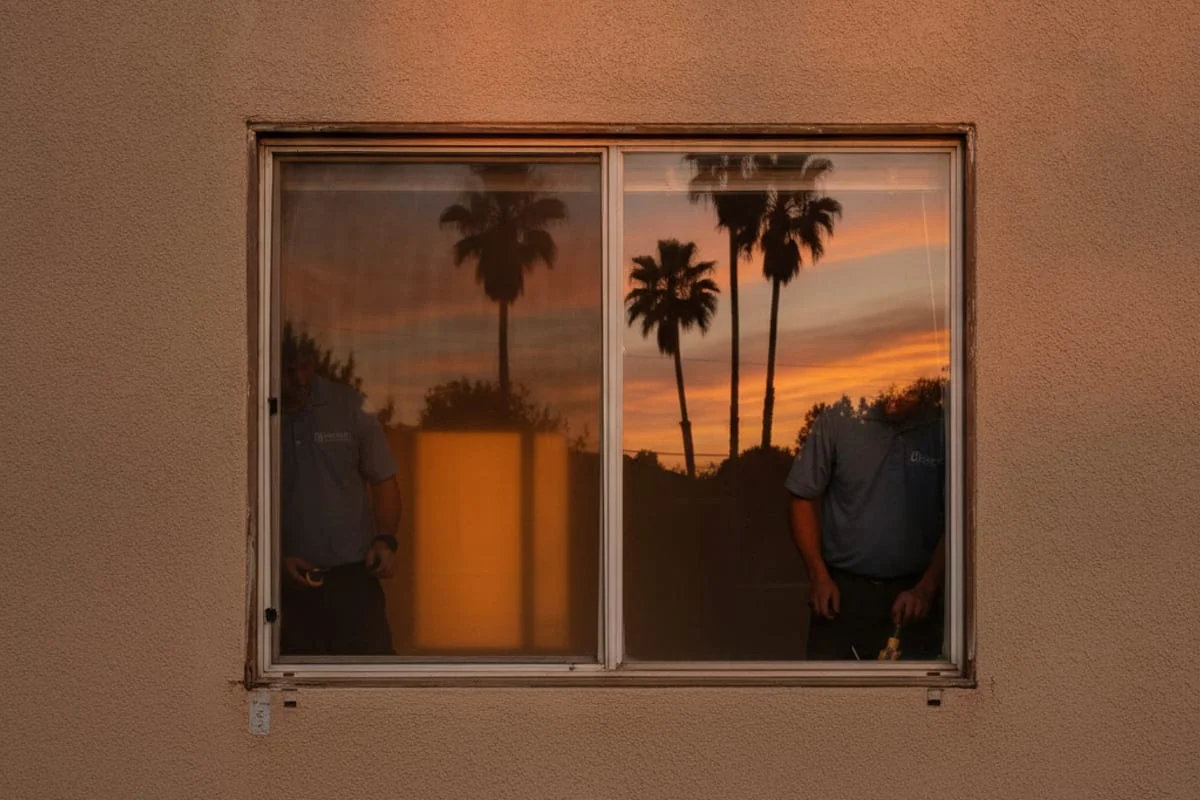
Why west-facing windows are the problem window in San Diego
San Diego’s sun angle in the afternoon means west-facing windows receive direct solar radiation at a low angle from roughly 2pm to sunset. That low angle hits more of the glass surface than the high-angle summer noon sun hits on south-facing windows, and the heat arrives late in the day when the home has already absorbed eight hours of solar load and the outdoor temperature is near its daily peak.
In Mission Valley, Kearny Mesa, El Cajon, Santee, and much of the inland county, afternoon west-facing rooms regularly reach 80-85°F even when the thermostat is set to 75°F. The primary driver is solar heat gain through glass. Fixing the windows is the most targeted way to address it.
How solar heat gets through glass
Solar heat comes through glass in two ways. The first is direct transmission: shortwave infrared and visible light passes directly through the glass and heats the surfaces inside the room. The second is absorbed heat: the glass itself absorbs some solar radiation and re-radiates it inward as longwave heat.
The ratio between these two mechanisms depends on the glass coating. Standard clear double-pane glass lets most solar energy pass directly through (high SHGC). Low-E coated glass reflects a portion of the solar spectrum before it crosses the glass, reducing both direct transmission and absorbed radiation.
This is why the Solar Heat Gain Coefficient (SHGC) matters specifically for west-facing windows. A low SHGC (0.20-0.25) means the window blocks most incoming solar heat. A high SHGC (0.40-0.60) means most solar heat passes through. For west-facing windows in San Diego’s inland zones, SHGC is often the most important single specification on the window.
Low-E glass: the right spec for west-facing windows in San Diego
A double-pane window with a solar-control low-E coating designed for warm climates typically achieves SHGC in the 0.19-0.27 range while maintaining reasonable visible light transmission. This is meaningfully different from a standard low-E coating that is optimized for cold climates (lower U-factor, moderate SHGC) rather than for heat rejection.
The key distinction: not all low-E glass is the same. A low-E coating optimized for Seattle’s cold, overcast climate may have an SHGC of 0.35-0.40 and a very low U-factor. A low-E coating optimized for Phoenix or San Diego’s inland zones may have an SHGC of 0.20-0.25 with a moderate U-factor. For west-facing windows in El Cajon or Santee, the San Diego/Southwest-optimized coating is what you want.
Ask your installer specifically for the SHGC on the west-facing windows, and verify the NFRC label. San Diego County is Climate Zones 7 and 10. The 2025 Title 24 package in force in 2026 uses a 0.30 prescriptive U-factor for fenestration here, with a 0.40 mandatory maximum. SHGC is also on the label. Do not treat a 0.25 west-facing SHGC as a number this page verified from the tables. Ask the installer to match the permitted schedule.
For the full explanation of how Title 24 climate zones work in San Diego and which ratings to specify, see the energy-efficient windows and Title 24 guide.
Window film: the alternative to window replacement
For homeowners who are not ready to replace windows but want to reduce west-facing heat gain, solar window film is a legitimate option. A high-quality solar control film applied to the interior glass surface can reduce SHGC from 0.55 (typical uncoated clear double-pane) to 0.20-0.30, which is similar to what a low-E replacement glass achieves.
The trade-offs of window film versus replacement glass:
Cost: Film is usually cheaper than replacing the window. Replacement on this site is the dual-pane or vinyl retrofit band after a measure. Get both quotes in writing. Do not use a round living-room total from this article.
Reversibility: Film can be removed. If you decide to sell the home and the buyer wants natural light without the film, it comes off.
Appearance: High-quality solar control film is largely invisible from inside and has a slightly reflective or tinted appearance from outside. The mirror effect on a west-facing window in afternoon sun is noticeable from the street and is a factor in HOA-restricted communities.
Durability: A properly installed window film from a quality manufacturer lasts 10-15 years on residential glass before it begins to degrade (bubbling, peeling, discoloration). A replacement window with a factory low-E coating typically carries a 20-year seal warranty and a lifetime coating warranty.
Effect on existing glass warranty: Applying window film to a window that is still under manufacturer’s warranty sometimes voids the seal warranty, because the film can increase the temperature differential between the two panes and stress the seal. Check the window manufacturer’s warranty terms before applying film to windows that are still under warranty.
Exterior shading options
Exterior shading is physically the most effective way to block solar heat gain because it stops the solar energy before it reaches the glass. Options include:
Fixed overhangs or shade structures: A roof overhang or pergola on the west side of the home blocks high-angle summer sun but is generally too far out of the sun’s path to block the low-angle late-afternoon west sun effectively. Fixed overhangs are effective for south-facing glass where the sun angle is higher.
Exterior roll shades: Fabric roll shades mounted above west-facing windows stop solar radiation before it hits the glass and can be retracted when the sun has passed. They do not change the window itself. Price them from the shade vendor, not from this page.
Deciduous trees and landscaping: A well-placed tree on the western property line that provides afternoon shade on west-facing windows is genuinely effective and has a payback period measured in years. It takes time, but a 20-foot tree planted on the west side of an El Cajon or Santee home provides real summer shading within 5-8 years. The tree loses its leaves in winter, allowing passive solar gain during the cooler months.
Horizontal fins or vertical fins: Exterior architectural fins (horizontal above the window or vertical at the sides) interrupt the solar angle for specific hours. These require structural attachment and are more commonly a new-construction feature than a retrofit, but they can be added to existing homes.
The combination approach
The most effective solution for a west-facing room in San Diego combines multiple strategies rather than relying on one. A typical combination:
- Replace single-pane or older clear dual-pane west-facing windows with low-E glass. Ask for the SHGC on the NFRC label. This site verifies Title 24 U-factor 0.30 prescriptive for Climate Zones 7 and 10, not a guessed SHGC.
- Add exterior roll shades for the worst windows (large west-facing living room glass)
- Plant one to two deciduous trees on the western exposure if space permits
This combination addresses solar heat gain at multiple levels and does not require relying on any single solution to do the whole job.
For homes where replacement is the priority, the window replacement service page covers the full scope of what a typical San Diego replacement project includes.
What does not work well
Interior blinds and drapes: Effective at blocking visible light and providing privacy, but solar energy has already crossed the glass by the time it hits interior shading. Interior shading converts that energy to heat inside the room rather than reflecting it outside. Some of the heat escapes back out, but most stays in.
Reflective mylar or temporary film: DIY reflective film from hardware stores works in the short term but tends to bubble, peel, and yellow quickly in San Diego’s UV-intense environment. Professional-grade ceramic solar film is a different product.
Tinting the glass: Glass tinting (adding color to the glass itself) reduces visible light transmission without a proportional reduction in solar heat gain unless a solar control coating is also applied. Dark-tinted glass in a west-facing window can actually increase the heat load by absorbing solar radiation into the glass itself, then re-radiating it inward.
The bottom line
West-facing heat gain through windows is the most common comfort complaint in San Diego’s inland home inventory, and low-E glass with a low SHGC is the most durable long-term solution. Window film and exterior roll shades are effective alternatives or complements for homeowners who are not replacing windows.
A west-facing room that is currently 10°F warmer than the thermostat set-point in summer afternoons almost always has a window-related heat gain as the primary driver, and that is solvable.
Call (858) 400-6418 to connect with a local window crew that can assess your west-facing exposure and recommend the right glass specification for your San Diego home.